Photographing a Landscape Without Rushing the View
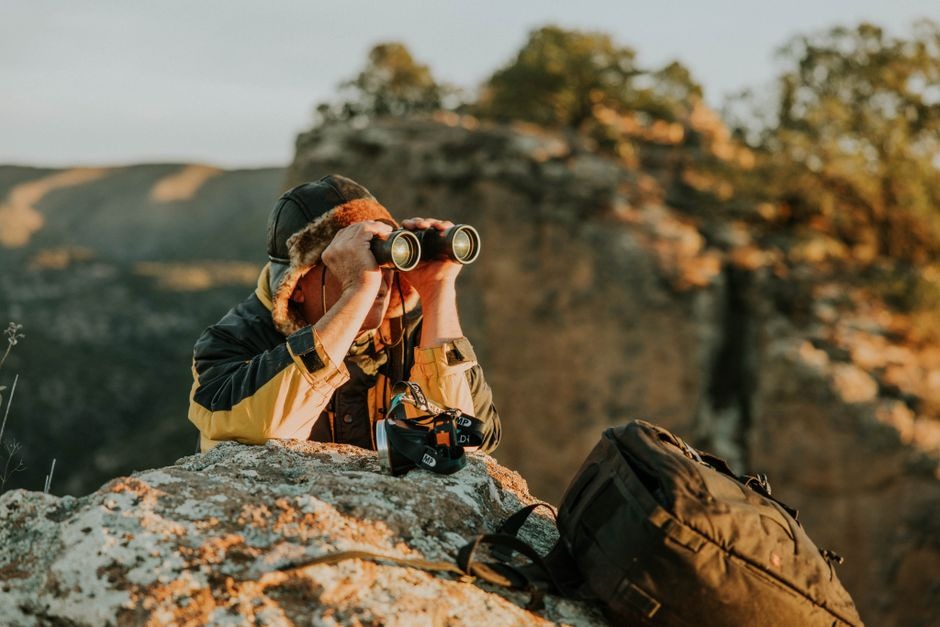
Beautiful scenery can create a strange pressure to photograph immediately. The light looks good, the view is wide, and the instinct is to raise the camera before anything changes. Yet many satisfying landscape photographs begin with the opposite move: stop, look, and wait for the scene to become more specific.
A landscape is never only a backdrop. It contains lines, distances, weather, foreground details, movement, and changing light. Spending a few minutes without taking a picture makes it easier to decide which of those elements actually holds your attention.
Look for the part of the scene you keep returning to
When facing a large view, let your eyes move around it several times. You may notice that you repeatedly return to one ridge, a path entering the frame, a patch of sunlight, a tree standing apart from the others, or the relationship between two shapes. That recurring point of interest can become the centre of the photograph.
This is often more effective than trying to include everything. A wide view can feel smaller in a photograph if every element competes equally. Choosing a clear subject gives the surrounding space a purpose.
Change your position before changing your lens
A few steps can transform the structure of an image. Moving lower may bring grasses or rocks into the foreground. Shifting sideways can separate overlapping hills. Walking forward may remove an empty strip of ground, while stepping back can introduce a branch or wall that frames the scene.
These small physical adjustments encourage active looking. They also reveal whether the composition works because of the place itself or simply because the first viewpoint was convenient.
Watch how light moves across the landscape
Natural light is not static, even on a clear day. Clouds can soften contrast within seconds. Late-afternoon light may illuminate one slope while leaving another in shadow. Reflections change as the sun moves, and haze can become more or less visible depending on direction.
If the light is close to something interesting, waiting a few minutes may be more useful than taking many nearly identical frames. Use the time to notice edges: where brightness meets shade, where the sky meets the horizon, or where a highlighted path disappears into darker ground.
Include evidence of scale carefully
A distant figure, hut, road, fence, or tree can help explain the size of a landscape. These details do not need to dominate. Often their value is simply to give the eye a familiar reference. The scene can feel more expansive when a small recognisable object sits within it.
Scale also works through layers. A close foreground, a middle distance, and a far horizon create depth without requiring dramatic scenery. Even modest hills or open fields can become visually rich when the image clearly describes distance.
Take fewer frames, then stay a little longer
There is no prize for returning with the largest number of photographs. After making a few deliberate frames, lower the camera again. The extra minute often reveals what the first rush missed: wind moving through grass, a person entering the path, mist lifting, or a softer expression of the same view.
The photograph is only one part of the outing. When you allow time to experience the place without continuously recording it, the images you do make tend to carry clearer choices. They become less about proving that you were somewhere beautiful and more about showing what, specifically, you saw there.